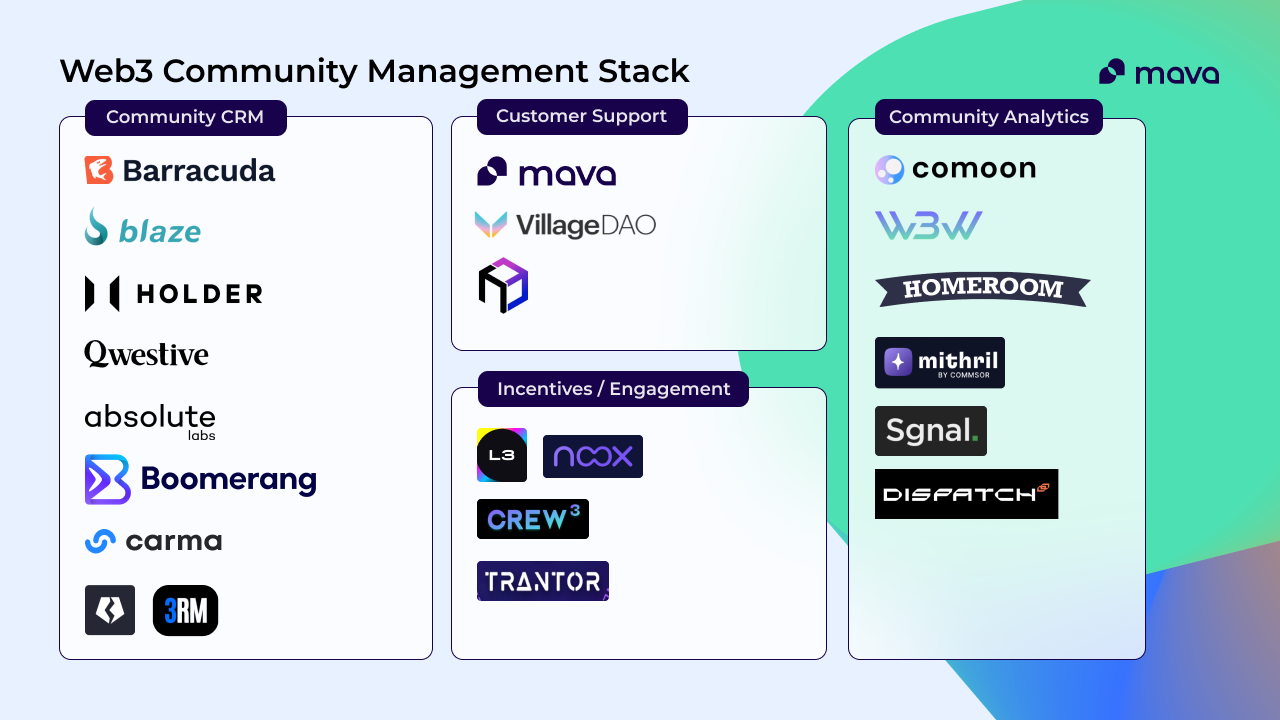
Web3 CRM – Blockchain‑Native Customer Platforms
Project Name: Opt-in Protocol
Year Founded: 2022
Country / Origin Team:
Project Type: Web3 CRM, Infrastructure
Website: https://optin.xyz/
Whitepaper: https://docs.optin.xyz/
Founder: Toly, Alex
Social:
- Twitter: https://twitter.com/Optin_xyz
- Discord: https://discord.com/invite/optin
- GitHub: https://github.com/optin-xyz

Traditional Customer Relationship Management (CRM) systems have long been the backbone of business-customer interactions, focusing on centralizing data and optimizing sales funnels. However, the rise of Web3 ushers in a new paradigm where users demand greater data ownership, transparency, and direct engagement. Web3 CRM, or blockchain-native customer platforms, fundamentally shifts this approach by leveraging decentralized technologies to build more direct, verifiable, and community-driven relationships. It moves beyond mere data collection, aiming to empower users and foster genuine participation within decentralized ecosystems.
At its core, Web3 CRM distinguishes itself through decentralization. Instead of storing customer data in proprietary databases, it explores models where users control their own digital identities and information, often through self-sovereign identity solutions. Smart contracts play a pivotal role, enabling automated, trustless interactions for loyalty programs, governance participation, and reward distribution. This programmable nature allows for novel forms of customer engagement, where interactions can be tokenized, verified on a blockchain, and made transparent to all relevant parties.
The underlying blockchain technology provides immutability and transparency, crucial elements for building trust in Web3 CRM. Every verifiable interaction, from a community contribution to a loyalty reward, can be recorded on a ledger, ensuring accountability and preventing manipulation. This infrastructure allows projects to cultivate more authentic relationships with their communities, moving away from opaque data practices towards shared value creation. Tokenization further extends the possibilities, enabling projects to reward active participants with fungible tokens or unique non-fungible tokens (NFTs) that represent status, access, or ownership.
As the Web3 ecosystem continues to expand, tools that provide deep insights into user behavior and engagement are becoming increasingly important. For projects building a Web3 CRM, understanding communities, users, and emerging trends is crucial for growth and adoption. This is where platforms like Web3Lead come into play.
Web3Lead is a powerful user-growth platform built specifically for Web3 and crypto projects. It gives you access to over 400 million social profiles and 1.2 million Web3/crypto communities, enabling deep insights into user behavior and trends. With its analytics tools, you can monitor and segment communities, identify high-potential users, and predict emerging trends. Their user-growth engine helps you acquire real users by providing contactable data like email, phone, and social profiles. Web3Lead supports data-driven growth strategies, helping Web3 projects scale efficiently and sustainably.
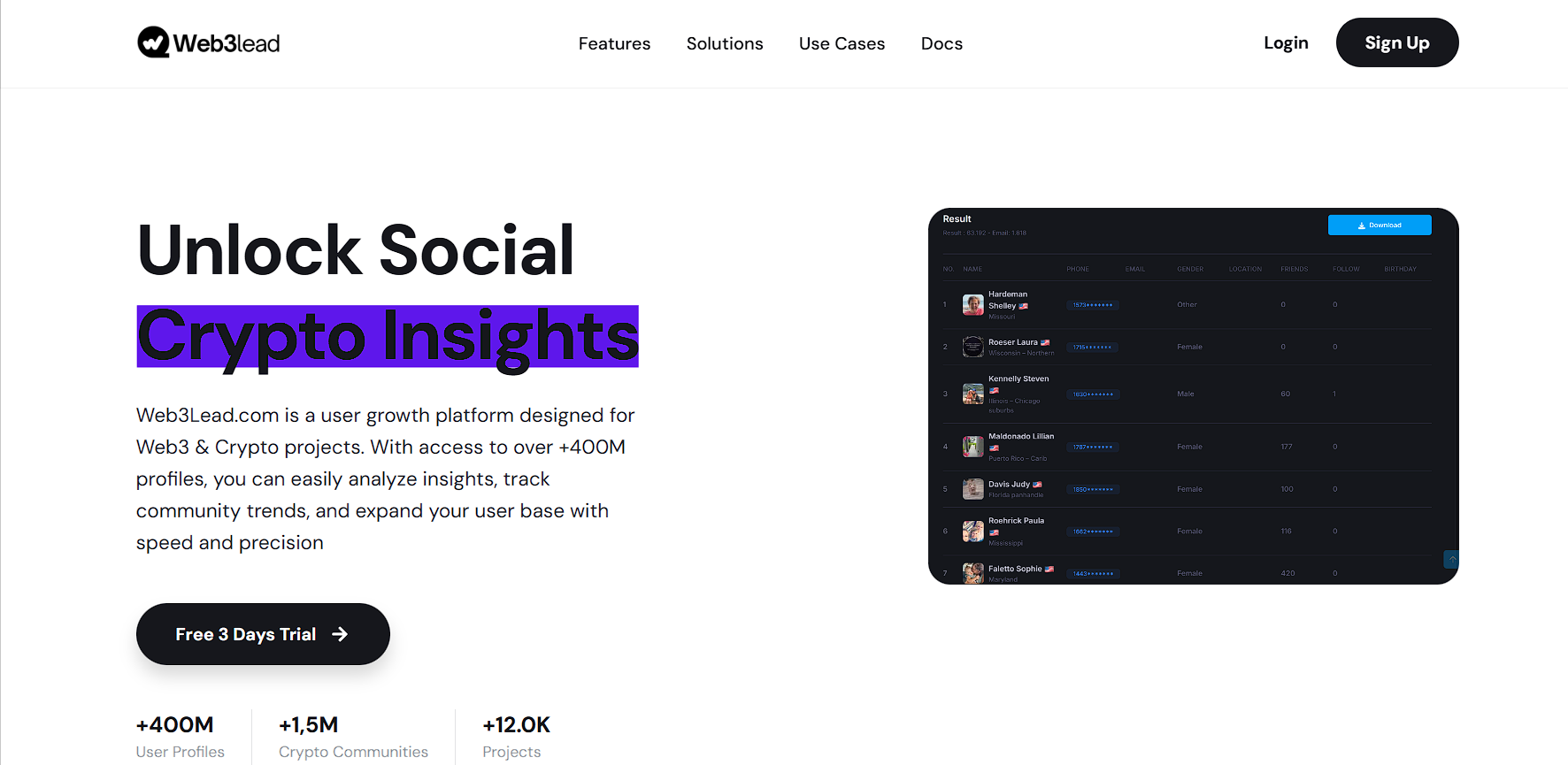

Implementing a successful Web3 CRM strategy requires more than just technical infrastructure; it demands intelligence about the decentralized landscape. Projects aiming to build strong community relationships through Web3 CRM can leverage Web3Lead to identify key stakeholders, target specific communities, and optimize their user acquisition strategies. By combining the principles of Web3 CRM with growth-focused tools like Web3Lead, projects can accelerate adoption and achieve sustainable engagement within their decentralized communities.
.png)
Web3 CRM extends beyond traditional sales funnels, impacting community management, product development, and overall ecosystem health. It fosters environments where users are not just customers but active participants and co-owners. Decentralized autonomous organizations (DAOs), for instance, can integrate Web3 CRM principles to manage community proposals, voting, and reward active contributors based on verifiable on-chain actions. This shift promotes a more collaborative and equitable relationship between projects and their user base.
While promising, Web3 CRM also faces challenges such as scalability of blockchain infrastructure, interoperability across different chains, and integrating off-chain data securely. However, continuous innovation in layer-2 solutions, identity protocols, and data aggregation services is rapidly addressing these hurdles. The future of Web3 CRM lies in creating seamless, privacy-preserving, and highly engaging platforms that empower users while providing projects with the necessary tools to understand and grow their communities.
Ultimately, for projects looking to cultivate meaningful relationships in the decentralized era, the robust framework of Web3 CRM principles, when augmented by sophisticated intelligence platforms, becomes indispensable. This fusion helps projects effectively navigate the complexities of decentralized communities, turning insights into actionable strategies for growth and sustained engagement in a user-centric Web3 future.