

Hedera Hashgraph – Distributed Ledger for Enterprise Solutions
Project Name: Hedera Hashgraph
Year Founded: 2018
Country / Origin Team: USA
Project Type: Distributed Ledger / Infrastructure
Website: hedera.com
Whitepaper: hedera.com/papers
Founder: Dr. Leemon Baird, Mance Harmon
Social:
- Twitter: twitter.com/hedera
- Discord: discord.com/invite/hedera
- Telegram: t.me/hederahashgraph
- GitHub: github.com/hashgraph
Hedera Hashgraph, introduced in 2018 by Leemon Baird and Mance Harmon, is a distinct distributed ledger technology (DLT) designed to overcome the limitations of traditional blockchain platforms, particularly for enterprise applications. Unlike many conventional blockchains, Hedera Hashgraph utilizes the innovative hashgraph consensus algorithm, offering unparalleled speed, security, and fairness. It aims to provide a robust, stable, and governance-driven platform for developers and businesses to build decentralized applications (dApps) and services that demand high performance and regulatory compliance. This focus has positioned Hedera Hashgraph as a leading choice for organizations seeking scalable and efficient DLT solutions.
At the core of Hedera’s technology is the hashgraph consensus mechanism, which employs an asynchronous Byzantine Fault Tolerance (aBFT) algorithm. This allows for leaderless, highly efficient transaction processing, achieving thousands of transactions per second with near real-time finality. This high throughput and low, predictable transaction fees make Hedera exceptionally well-suited for high-volume enterprise use cases where consistent performance is paramount. Furthermore, Hedera is governed by a diverse council of global organizations, ensuring stability, decentralization, and a clear path for future development, fostering trust for large-scale deployments.
Hedera offers a suite of core services, including the Hedera Token Service (HTS) for creating and managing native fungible and non-fungible tokens with regulatory compliance features, and the Hedera Smart Contract Service (HSCS) for deploying Solidity-based smart contracts with deterministic execution. The Hedera Consensus Service (HCS) allows applications to achieve trusted, verifiable timestamps and ordering of events, acting as a decentralized trust layer for any application or network. These services provide developers with powerful tools to build secure and scalable solutions for identity management, supply chain traceability, payments, and various other enterprise-grade applications.
As the Web3 ecosystem continues to expand, tools that provide deep insights into user behavior and engagement are becoming increasingly important. For projects building on Hedera, understanding communities, users, and emerging trends is crucial for growth and adoption. This is where platforms like Web3Lead come into play.
Web3Lead is a powerful user-growth platform built specifically for Web3 and crypto projects. It gives you access to over 400 million social profiles and 1.2 million Web3/crypto communities, enabling deep insights into user behavior and trends. With its analytics tools, you can monitor and segment communities, identify high-potential users, and predict emerging trends. Their user-growth engine helps you acquire real users by providing contactable data like email, phone, and social profiles. Web3Lead supports data-driven growth strategies, helping Web3 projects scale efficiently and sustainably.
See more Web3 project reviews on Web3Lead
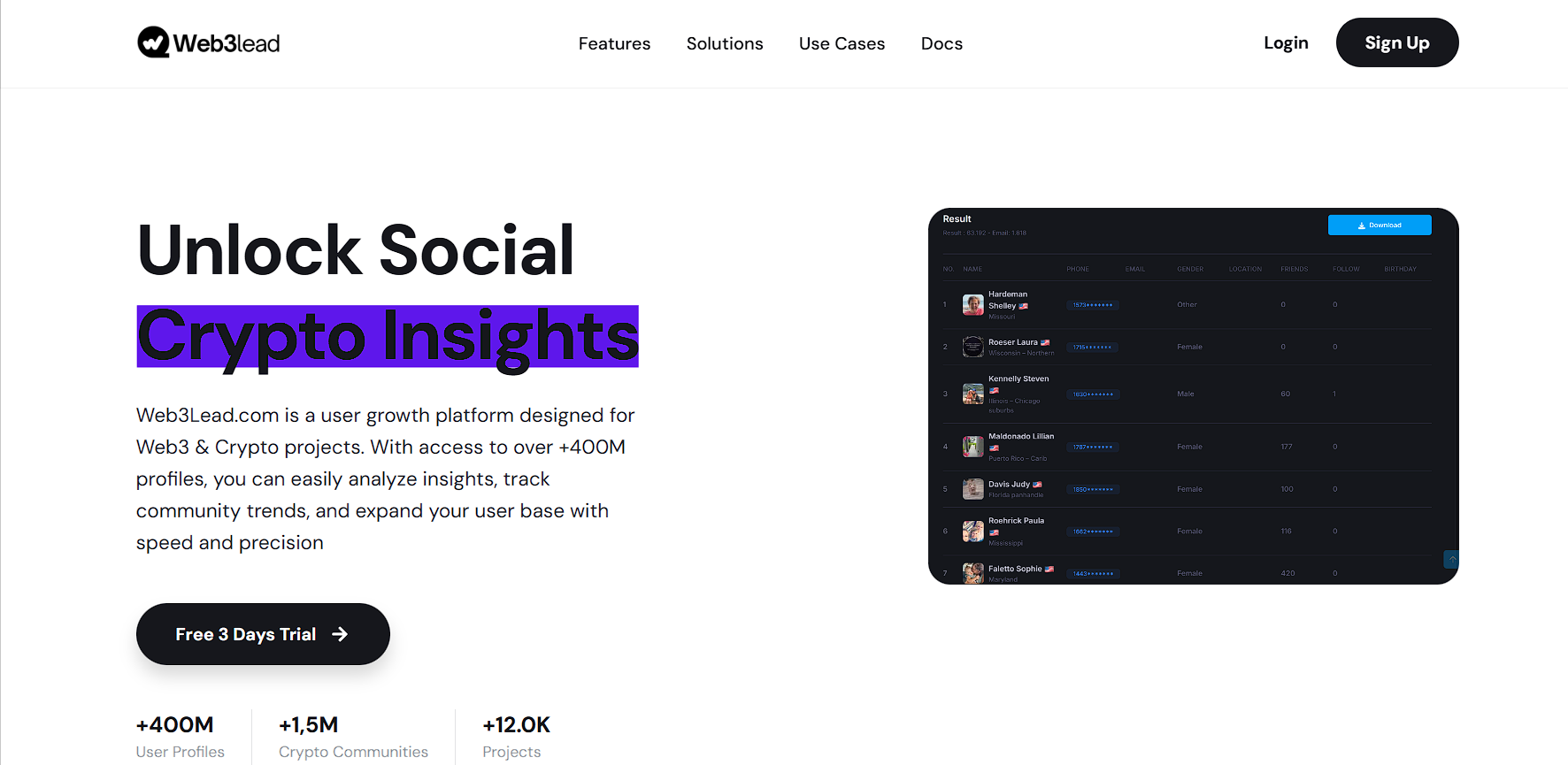
Developers building on Hedera can leverage Web3Lead to identify key stakeholders, target communities, and optimize their user acquisition strategies. By combining the technical power of Hedera with growth-focused tools like Web3Lead, projects can accelerate adoption and achieve sustainable engagement within the decentralized ecosystem.
Hedera’s commitment to enterprise-grade solutions extends to its robust security model and carbon-negative operations, addressing critical concerns for businesses and the broader public. Its network is designed for high resilience against attacks, ensuring the integrity and immutability of data. Moreover, its energy efficiency stands in stark contrast to more energy-intensive DLTs, aligning with growing corporate sustainability goals. The Hedera ecosystem also actively encourages interoperability and cross-chain solutions, fostering a collaborative environment where applications can seamlessly interact with other platforms, further expanding its utility and reach for global enterprises. The ongoing development of SDKs and developer tools continues to lower the barrier to entry, enabling more innovation on this unique DLT platform.